By Dr. Steffen Heinrich, Co-founder and CEO, Peregrine.ai · Last updated 21 October 2026
For most telematics service providers, licensing perception software and building their own product layer on top is faster and lower-risk than developing dashcam computer vision in-house. Building pays off when perception is your core differentiator, you control a single camera platform, and you can fund a dedicated machine learning team for years.
Key takeaways
- The models are only one part of the work. Road data, annotation, edge optimization for each chipset, validation and ongoing retraining make up most of the effort.
- The effort grows with every camera model, country and event type you support.
- A hybrid approach is common: license the perception, and build scoring, coaching and the user experience yourself.
What does building dashcam computer vision in-house involve?
A production system for video telematics needs six workstreams running at the same time.
Road data at scale
Models need footage from every country, road type, season and lighting condition your customers drive in. The rare situations matter most and are the hardest to collect: near misses, unusual signs, a cyclist at dusk. Footage of identifiable people falls under GDPR, so most teams anonymize faces and license plates as part of collection to keep the training data usable.
Annotation
Every frame used for training has to be labeled. Computer vision practitioners point out that annotation can cost more than developing the model itself (Inviol, 2026).
Model development
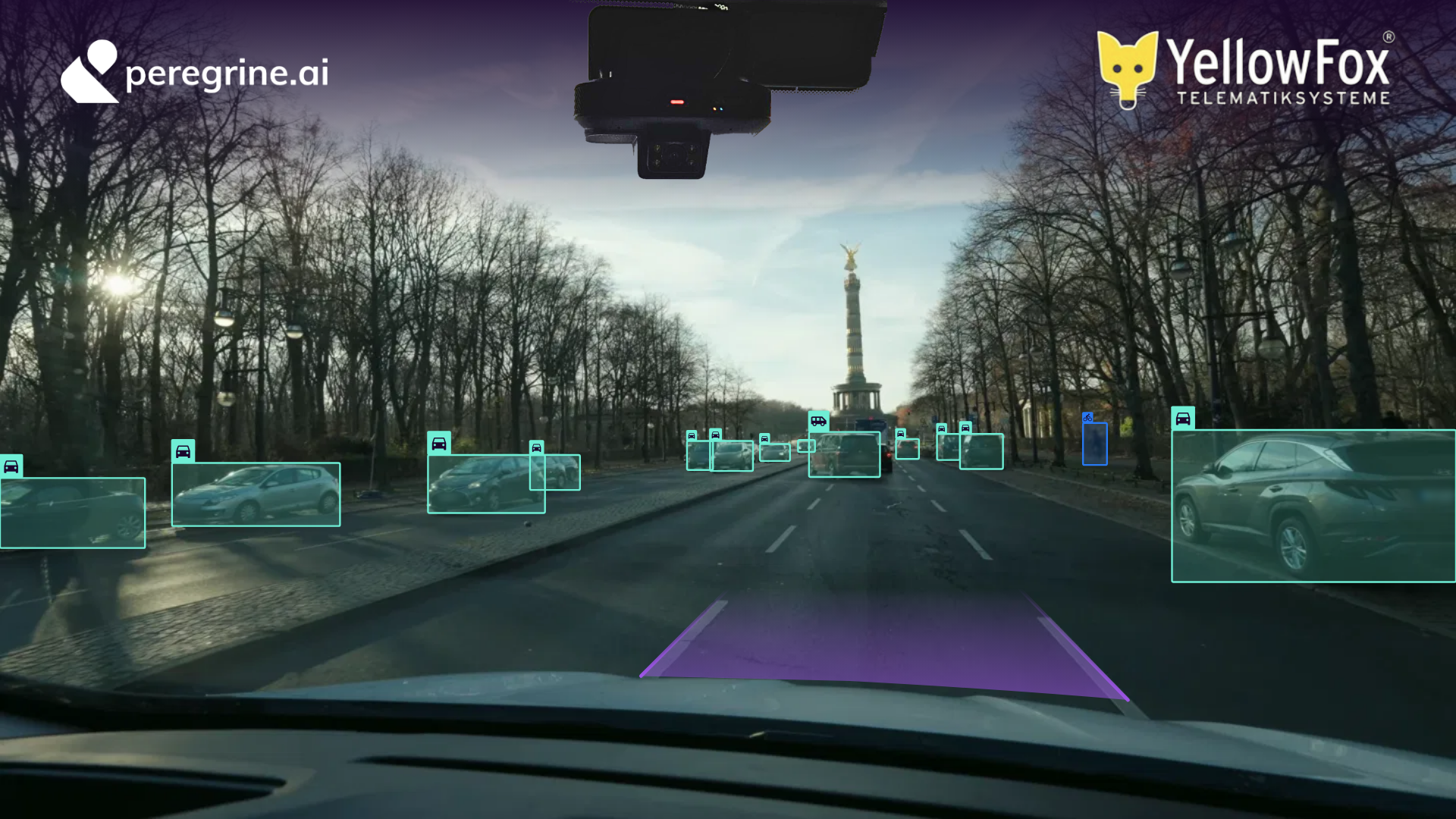
Detecting objects is the starting point. Useful risk events also need depth, motion, lane geometry and scene context, so the system can tell a harsh brake in heavy traffic from a near miss that needed no braking at all.
Edge optimization for every chipset
A dashcam has a small processor, a fixed power budget and heat limits. The model has to be quantized and compiled for each chip’s neural processing unit, and real-time alerts have to arrive within a fraction of a second. This work repeats for every camera model you sell.
Validation
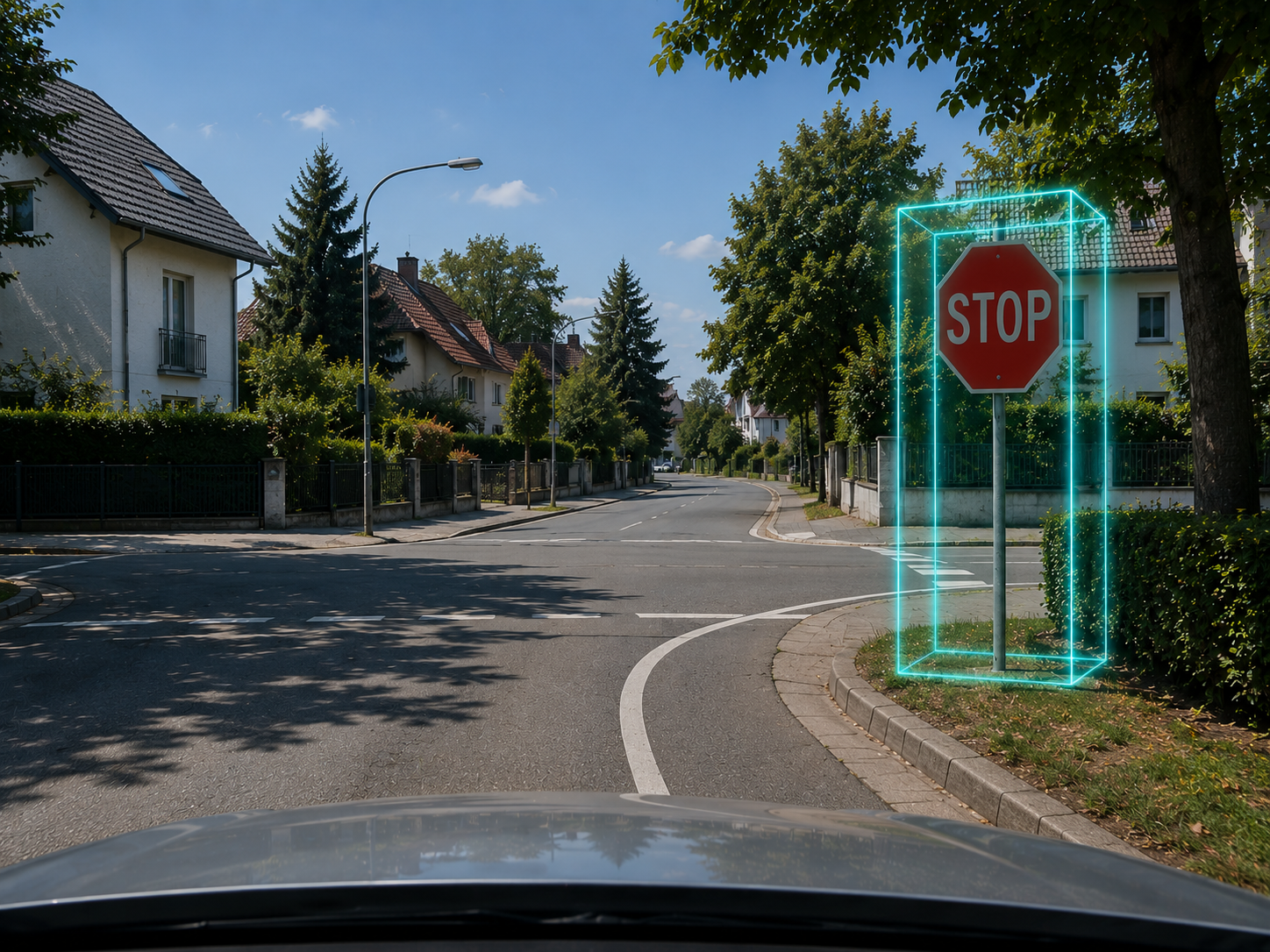
Before launch you need measured false alert rates across conditions: night, rain, snow, dense cities and motorways. Traffic signs differ between countries, so speed and sign detection has to be validated market by market.
Lifecycle and updates
Models lose accuracy as roads, vehicles and camera positions change. Keeping them accurate means collecting new edge cases, retraining and delivering updates over the air to devices already in the field.
Behind these workstreams sits a team of machine learning engineers, data engineers, embedded engineers, MLOps specialists and test engineers.
How long does it take and what does it cost?
There is no reliable industry figure for dashcam computer vision specifically. For computer vision safety systems in general, Inviol estimates 12 to 18 months and $70,000 to more than $250,000 for an initial build, before ongoing maintenance, and notes that missing data and infrastructure details can lead to underestimates of as much as 70% (Inviol, 2026).
Video telematics usually sits at the upper end of that range or beyond it. Each additional camera model needs its own edge optimization, each new country needs its own validation, and each new event type needs its own data and labels.
When does building make sense?
- Perception is your product. Your customers choose you mainly for the quality of the detection itself.
- You run one camera platform. A single chipset and camera design keeps edge optimization manageable.
- You already have the team. You employ experienced computer vision and embedded machine learning engineers.
- You can fund the long term. You have budget for data collection and retraining every year, well beyond the first release.
When does licensing make sense?
- You support several camera models or plan to change hardware suppliers.
- Your customers are asking now and you need AI features within months.
- Your advantage lies in the platform: workflows, coaching, integrations and service.
- Your machine learning team is small or focused on other parts of the product.
Is there a middle path between build and buy?
Yes. Many telematics providers license the perception layer and build everything above it: risk scoring rules, coaching workflows, dashboards and integrations. Their product stays their own, and the hardest technical layer comes from a specialist. Webfleet Video’s Visual Intelligence upgrade, for example, runs on Peregrine Vision inside Webfleet’s own platform.
| Build in-house | License perception | Hybrid | |
|---|---|---|---|
| Time to market | Longest: data, models and edge work start from zero | Shortest: integrate through an SDK or API | Short for perception, your own pace for product features |
| Upfront investment | High: team, data and infrastructure | Low: integration work and license fees | Medium: integration plus your own product team |
| Ongoing effort | Retraining, validation and updates for every camera and market | Mostly carried by the vendor | Vendor maintains perception, you maintain your product layer |
| Control | Full control of models and roadmap | Depends on the vendor’s roadmap | Full control of the customer experience |
| Hardware flexibility | Each new camera adds work | Depends on the chipsets the vendor supports | Depends on the chipsets the vendor supports |
| Best fit | Perception is the core product | Fast launch with a small team | Platform-led differentiation |
What should you ask a perception vendor before signing?
- Which chipsets and camera models do you support today, and how do you adapt the model to a new one?
- How was your on-device latency measured, on which chipset and against which baseline?
- How do you measure false alert rates, and in which conditions and countries?
- Where does anonymization happen, and is footage anonymized before anyone views it?
- How are model updates delivered to devices already in the field?
- Do you integrate through firmware (SDK), through structured events (API), or both?
- How do you collect new edge cases from the fleet without collecting personal data?
- Which countries are validated for sign and speed limit detection?
Ask for the benchmark setup behind every number. A figure without the chipset, dataset and baseline it was measured on is hard to compare.
Where Peregrine.ai fits
Peregrine Vision is perception software for telematics providers and camera makers. It runs on the camera hardware partners already ship, integrates through an SDK or API, and reaches devices in the field over the air.
- Under 85 ms from camera frame to action, on the device
- More than 90% fewer false alerts, in selected deployments
- 95% less bandwidth than streaming video, in selected deployments
We share the benchmark setup behind each figure on request. Webfleet and Linqo run Peregrine Vision on their platforms today.
Request the benchmark detailsFrequently asked questions
Can a telematics provider build dashcam AI with open-source models?
Open-source models are a useful starting point for prototypes. A production system still needs road data from your markets, annotation, optimization for each camera chipset, validated false alert rates and a way to update devices in the field.
What is the hybrid approach?
The telematics provider licenses the perception layer from a specialist and builds its own scoring, coaching, dashboards and integrations on top. The provider keeps control of the customer experience.
Why does each new camera model add work?
Each camera has its own chipset, power budget and mounting position. The model has to be optimized and validated again for every combination.
Related: Why your video telematics strategy is trapped by G-force · Peregrine Vision
Sources
Inviol (2026), Build vs buy: should you develop AI safety monitoring in-house? inviol.com