Peregrine Vision technology

From pixels to position, context and action

The perception software behind every Peregrine product. It runs on the camera's own processor and turns each frame into something your system can act on.

30 car car person limit 30 17 m 6 m Entering your lane Warning

Event sentPedestrian entering lane, driver warned

Illustration
  1. Pixels
  2. Perception
  3. Position
  4. Context
  5. Action

The frame is read once, for every task

Most systems run a separate model per job. Peregrine Vision reads each frame once and takes every output from that reading, so a dashcam-sized processor carries the full set.
One camera frame Shared perception model ObjectsVehicles, people, signs and signalsTracksThe same object, frame after frameDepthHow far away each part of the scene isLanes and roadLane lines, edges and drivable spacePose and gazeBody pose outside, driver attention insideSceneWeather, road surface and traffic density
One dashcam frame of a city street with a cyclist ahead

Shared perception model

  • ObjectsVehicles, people, signs and signals
  • TracksThe same object, frame after frame
  • DepthHow far away each part of the scene is
  • Lanes and roadLane lines, edges and drivable space
  • Pose and gazeBody pose outside, driver attention inside
  • SceneWeather, road surface and traffic density
  1. Pixels
  2. Perception
  3. Position
  4. Context
  5. Action

What the camera picks out

Model output, drawn back onto the footage it came from.

Several outputs, one drive Every layer here comes from the same footage, processed on the device.

LanesDepth

Lanes and depthLane geometry and distance, frame by frame.

Signs

Signs, readFound and read as the vehicle passes.

Pose

Body posePosture and direction of people near the road.

SignsMotion

Stop or rollA stop sign, and whether the vehicle came to a stop.
  1. Pixels
  2. Perception
  3. Position
  4. Context
  5. Action

Where everything is, the camera included

Depth from one camera, and visual SLAM to follow how that camera moves. The vehicle gets a position, and so does everything it passes. No LiDAR on board.

What the camera seesPoints followed frame to frame
No satellite signal
What it buildsRoute, surroundings and placed objects
Depth from one camera, checked against LiDAR
  • Distance in metresFrom one standard camera.
  • The vehicle's own movementWorked out frame by frame from the image.
  • Objects on the mapSigns, lights and damage placed where they stand.
  • Position without satellitesIn tunnels and between tall buildings.
  1. Pixels
  2. Perception
  3. Position
  4. Context
  5. Action

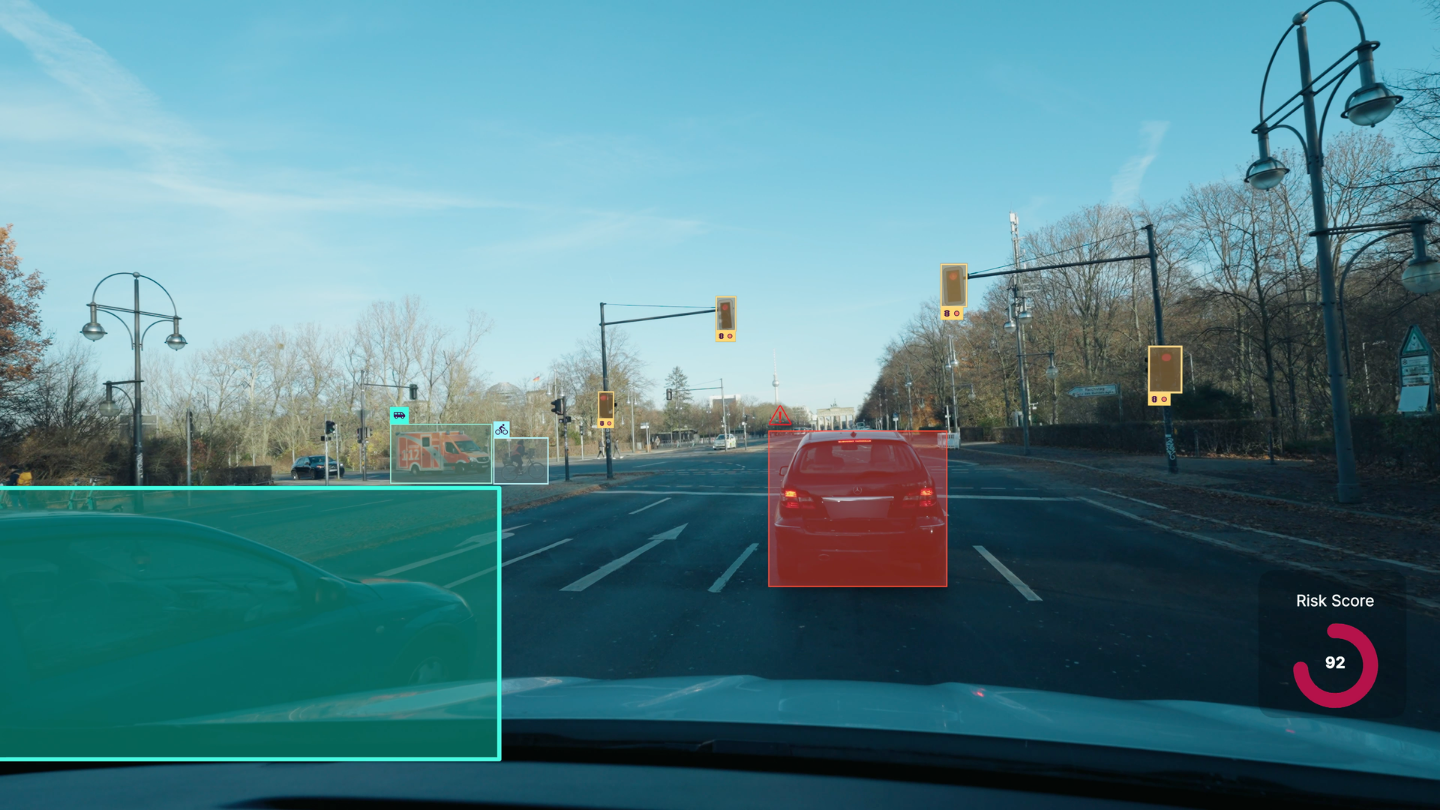
Detection sees objects. Peregrine reads the situation.

Peregrine Vision combines objects, movement, distance and conditions into an event that says what happened and why.

An object detector returns

  • car
  • car
  • truck
  • person
  • traffic light
A road scene with a tailgating and distraction event detected and scored

Peregrine Vision returns

type
tailgating + distraction
time to contact
0.9 s
risk
92 / 100
media
clip, faces and plates blurred

The same harsh brake, read against the whole trip

Read from the accelerometerA harsh braking event, counted against the driver.
Read in contextBraking for a cyclist at roadworks, on a wet road. A defensive reaction.
Illustration
  1. Pixels
  2. Perception
  3. Position
  4. Context
  5. Action

A warning in the cab, an event in your backend

The response happens on the device. Your platform gets a structured record of each event.

Every frameContinuous video from the camera

On the devicePeregrine Vision reads, decides and filters

  • Warning in the cabRaised on the device, while it can still help
  • Event to your backendOver the API, with an optional anonymised clip
  • Update to the mapSigns, roadworks and damage, with coordinates

99%of the visual data is filtered out on the device

Raw video to a server~1.5 GB
Peregrine events~0.023 GB
Per camera, per hour, measured in selected deployments.

Built for the edge

Shaped to fit the chip in the device

Each model is cut to the compute, memory and power of the hardware it runs on.

  • Quantised for GPU, CPU, NPU or ASIC
  • Runs with no connection
  • SDK or API

Tested on more than 250 consumer chipsets.

Latencyunder 85 ms

Memorywithin budget

Powerwithin budget

Illustration. The line marks the device's limit.

The same hazard, two routes to a warning

Raw video to a server~1.5 GB
Peregrine events~0.023 GB

Data per camera, per hour, measured in selected deployments. Route timings are an illustration.

Silicon we deploy on. Ask about your chipset

  • NVIDIA
  • Arm
  • Qualcomm
  • MediaTek
  • Intel
  • Ambarella

Better in the field

Models that learn from what they find hard

Cameras in service flag the scenes their model is unsure about. Those scenes become the next round of training.

  1. FlagThe device marks a scene it is unsure about.
  2. FindSimilar scenes are found across the fleet's data.
  3. LabelAnnotated, with labels carried through each sequence.
  4. UpdateThe improved model goes back over the air.
Finding similar scenes in Peregrine Scene Explorer

Privacy by design

Identities removed before anything is kept

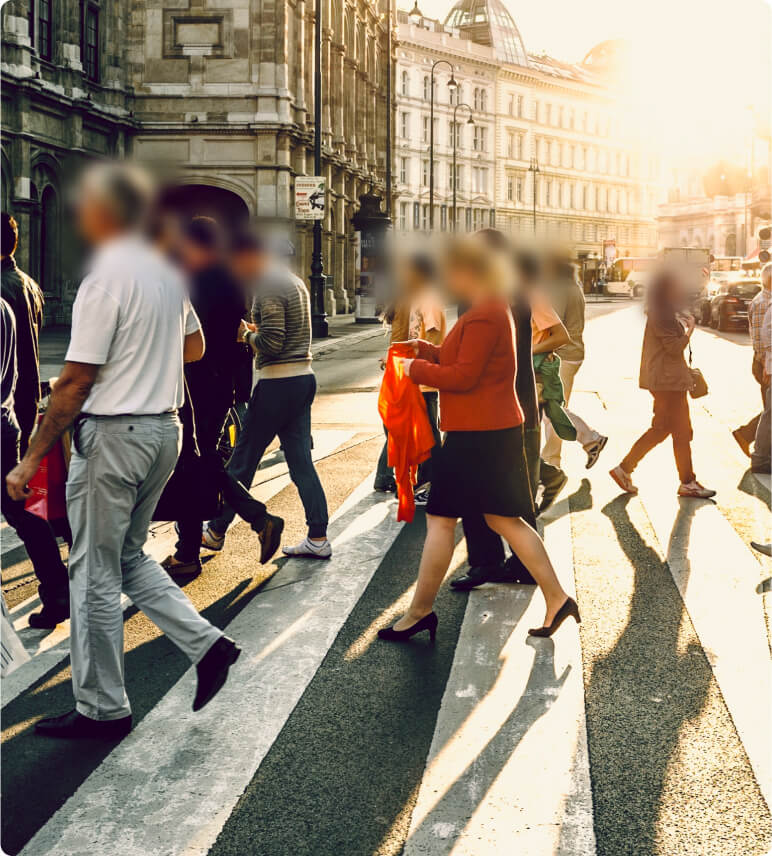
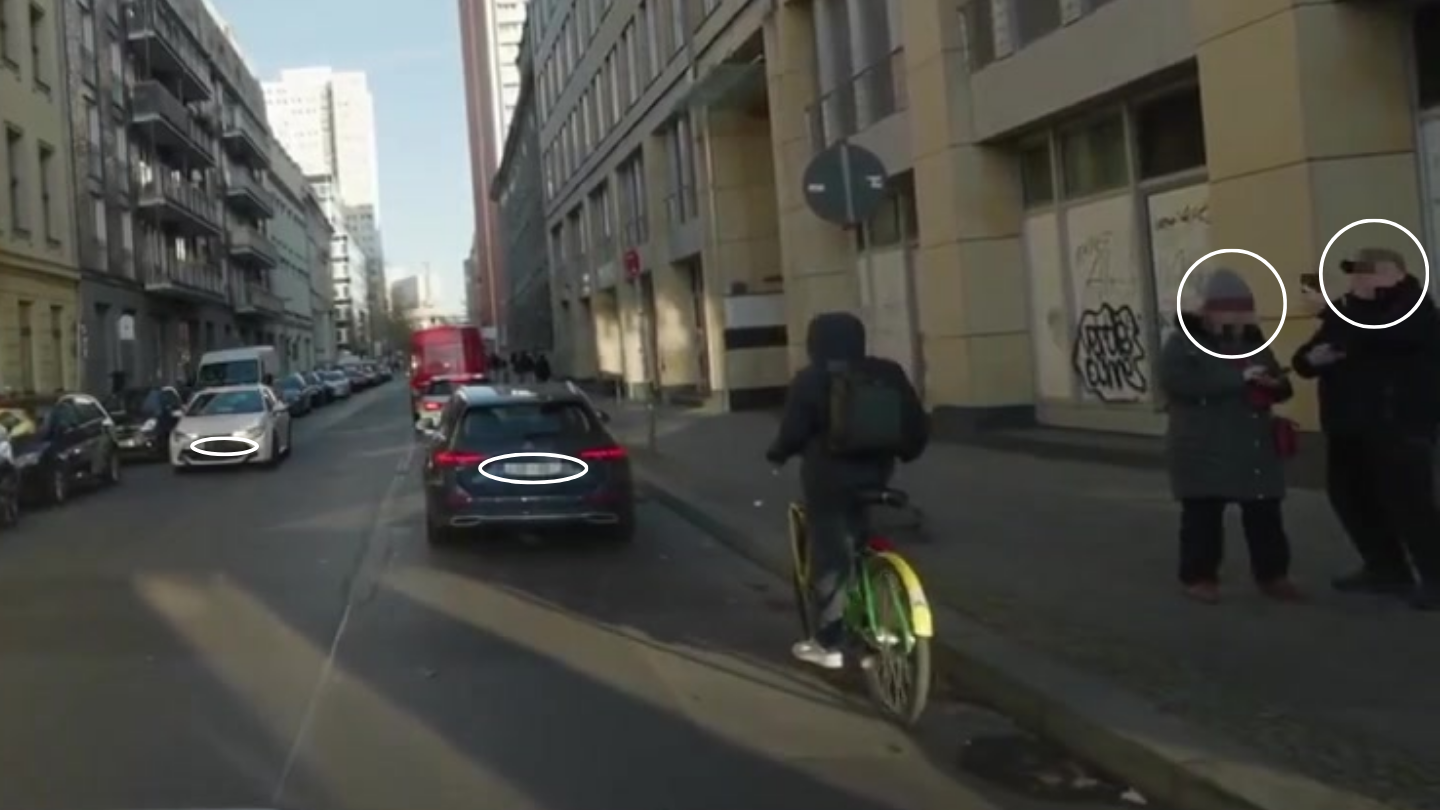
Faces and licence plates are blurred automatically. Most of what the camera sees is never kept.

  • Anonymised before storageBefore anyone views it.
  • Relevant events onlyThe rest is discarded.
  • Data without videoWhere structured events are enough.
  • EncryptedOn hardware you choose.
Watch the anonymisation running

Faces blurredPlates blurred

Where it runs

The technology behind each Peregrine solution

The same perception underneath, tuned to each sector's hardware and events.

Peregrine Flow

See the models work before you integrate them

Our browser tool for trying Peregrine Vision models and seeing their output drawn on video.

Try Peregrine Flow

At a glance

Cameras
Standard cameras, facing the road or the cabin
Runs on
Embedded GPU, CPU, NPU or ASIC
Outputs
Objects, tracks, depth, lanes, pose, scene and events
Latency
Under 85 ms from frame to action
Connection
Optional. Perception and warnings run offline
Integration
SDK on the device, or API to your backend
Updates
New models over the air
Privacy
Faces and plates anonymised before storage

See what Peregrine Vision makes of your camera

Bring your camera, your compute platform and your use case. We will show you how Peregrine Vision fits your architecture.