CEO & Co-Founder
Steffen Heinrich
When we founded Peregrine in 2018, my co-founders and I had just spent years working on self-driving car initiatives across Silicon Valley and Europe. Looking at the broader mobility landscape, we noticed a glaring disconnect: commercial vehicles were being outfitted with cameras at a rapid pace, yet those cameras were fundamentally “dumb.” They were defined by hardware limitations and lacked the cutting-edge machine learning required to actually understand the world around them.
Today, most fleet operators still look at a commercial dashcam and see a necessary expense: a classic cost center justified only by the money it saves when exonerating a driver or lowering an insurance premium.
But what if your cameras could actively generate revenue when things go right?
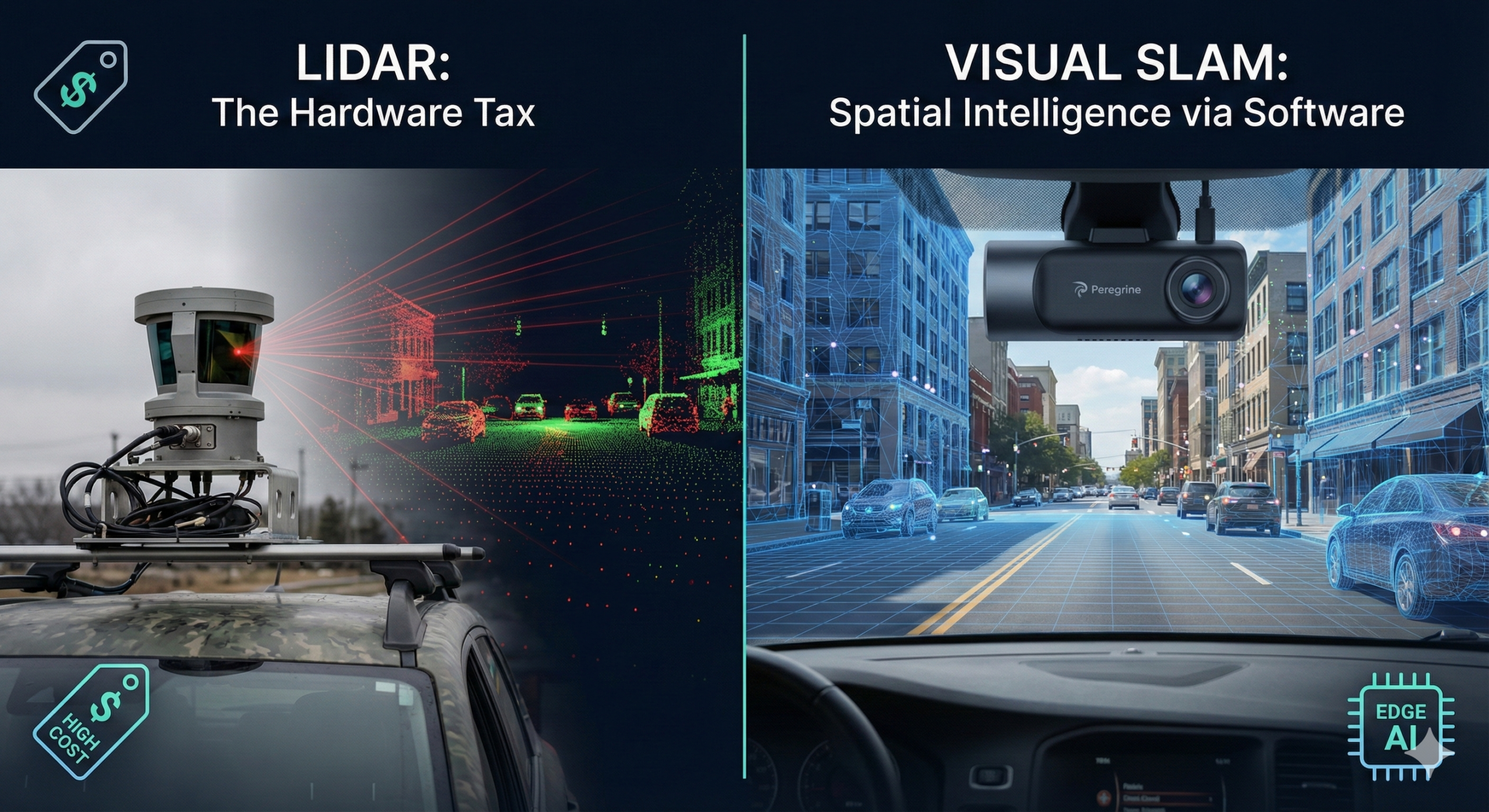
We are in the midst of a massive paradigm shift in mobility and logistics. The conversation is moving rapidly away from basic event recording and toward Data-as-a-Service (DaaS). By leveraging Edge AI and Visual SLAM (Simultaneous Localization and Mapping), forward-thinking telematics providers and fleet operators are transforming their vehicles into roaming data-collection engines—and they are monetizing the results.
Here is how the transition from cost center to revenue generator is happening, and why Visual SLAM is the underlying engine making it possible.
The Problem with the Status Quo
Historically, trying to extract broader value from fleet video has been a logistical and financial nightmare.
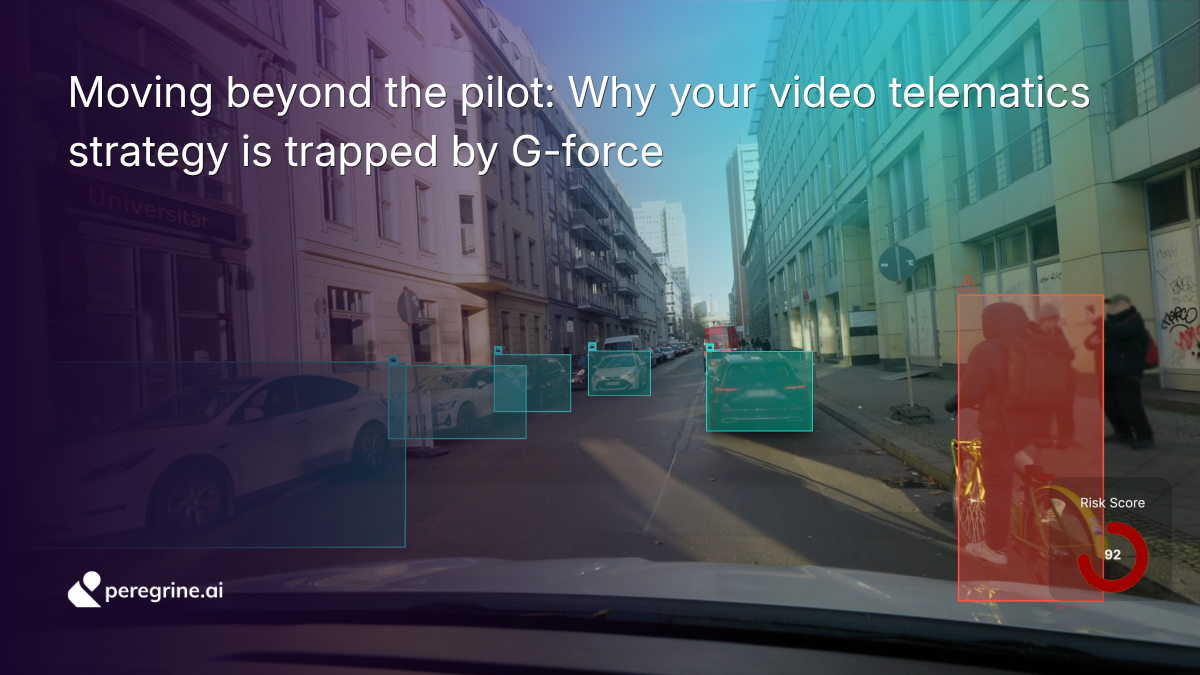
Standard telematics rely on GPS and G-force sensors. They tell you where a vehicle was and if it braked hard, but they lack visual context. To get that context, traditional systems rely on sending massive amounts of raw video data to the cloud. This approach is fundamentally broken for three reasons:
- Prohibitive Cellular Costs: Streaming hours of high-definition video over LTE/5G destroys profit margins. For asset-light 3PLs operating on razor-thin margins, bloated data bills are a non-starter.
- High Latency: Processing data in the cloud means delayed insights, making real-time intervention impossible.
- Privacy Liabilities: Uploading raw, unredacted footage of pedestrians and license plates to central servers is a massive compliance risk under the GDPR and emerging EU Data Acts.
To monetize data, you need rich, contextual information at scale. You cannot achieve that if you are paying exorbitant fees just to transmit heavy, high-risk data.
The Catalyst: Visual SLAM and Hardware-Agnostic Edge AI
The solution isn’t building better cloud infrastructure; it is bringing the intelligence directly to the camera. This is where Edge AI and Visual SLAM change the game.
Visual SLAM is a computer vision technique that allows an AI to map its environment and understand its exact location within that environment simultaneously, using only camera inputs. Instead of recording a dumb video file, our AI analyzes the scene on the device in real-time.
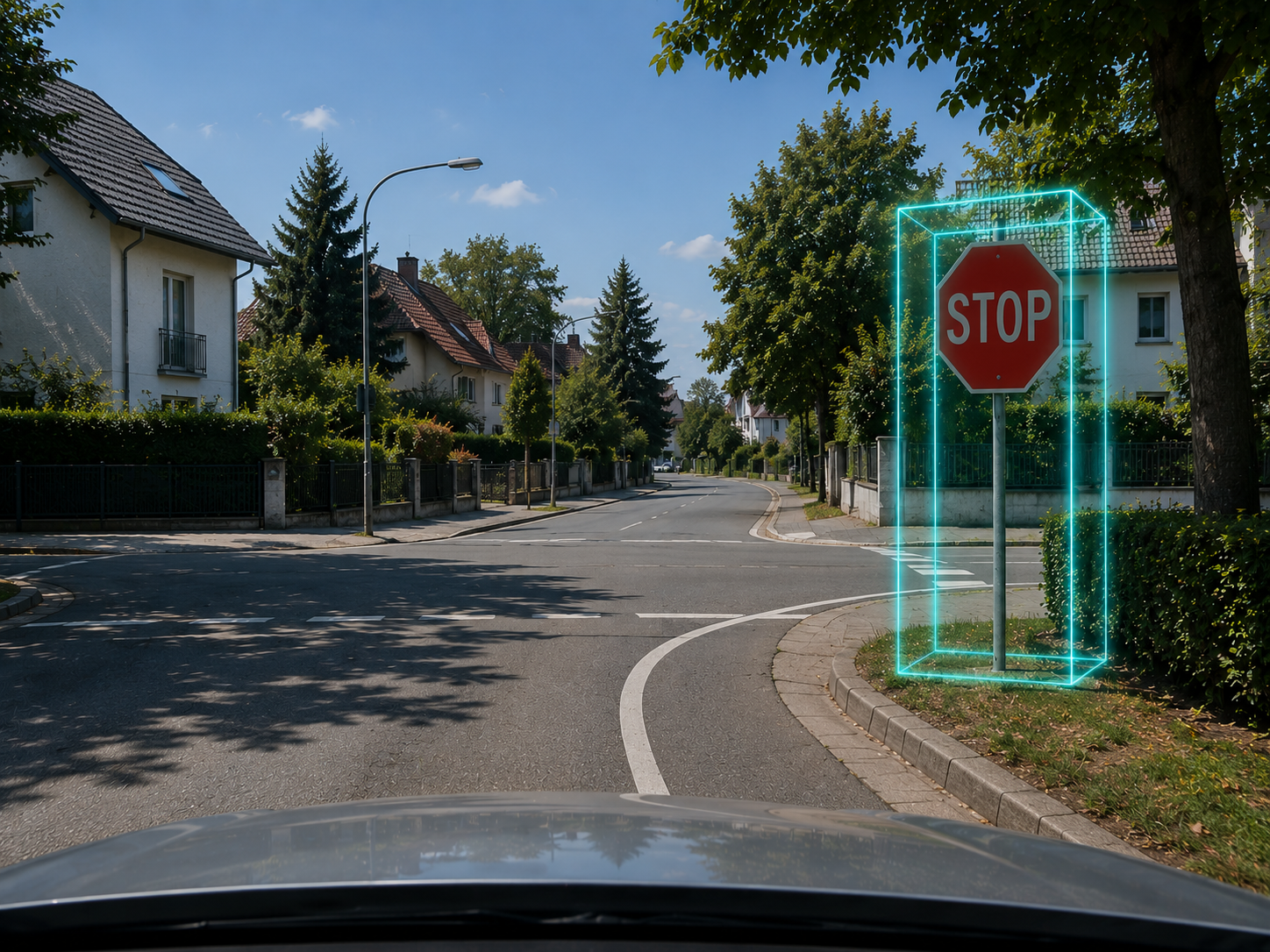
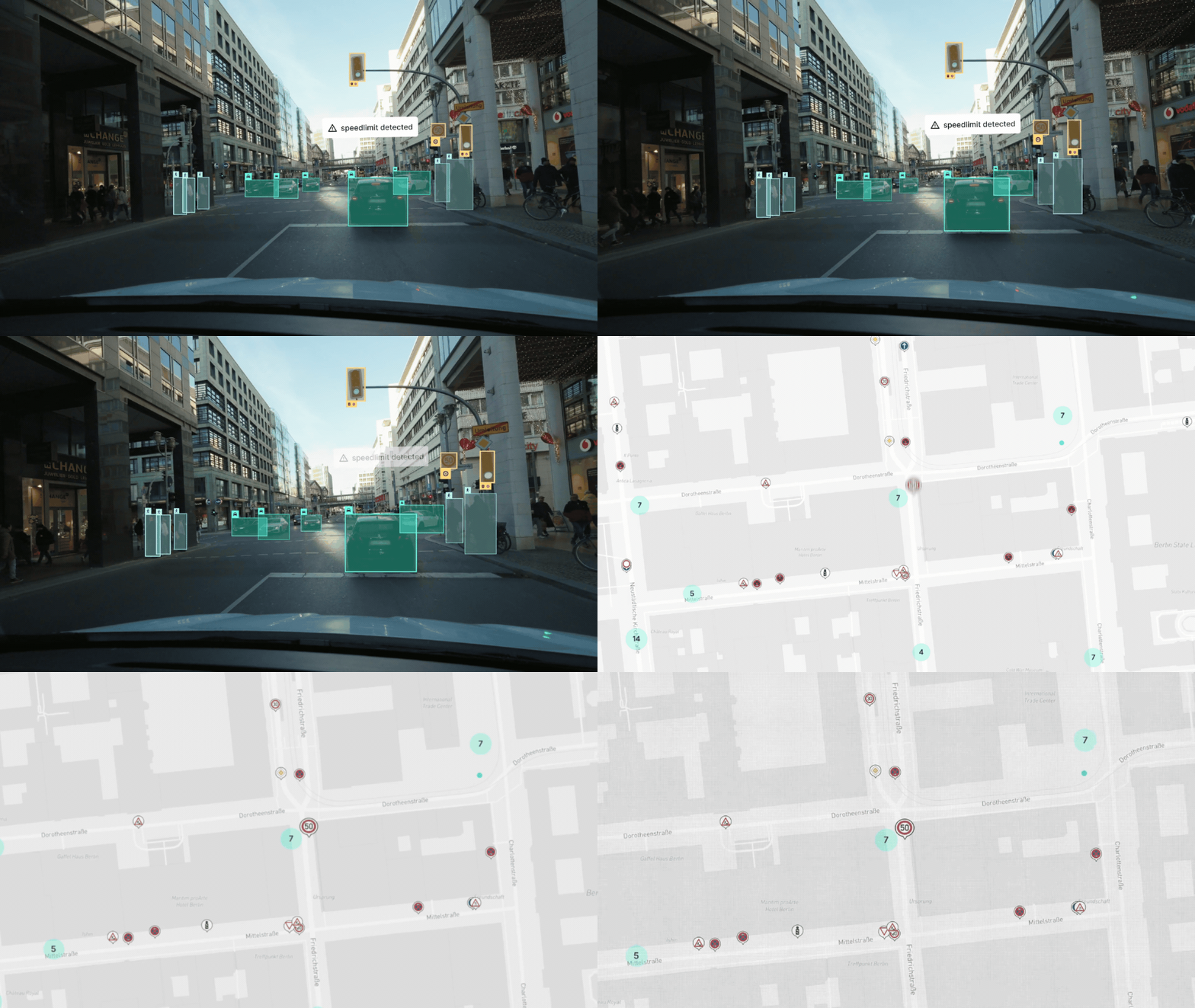
Through the continuous R&D happening at Peregrine Labs, we have built hardware-agnostic models that can run multi-task neural networks on the low-power embedded devices already installed in your fleets. The AI identifies road signs, detects lane markings, spots surface degradation, and measures traffic density natively.
Instead of sending gigabytes of raw video to the cloud, the camera sends a few kilobytes of highly structured, contextual metadata.
Entering the Telematics DaaS Market
Once your fleet is generating lightweight, structured environmental data rather than heavy video files, you have officially entered the DaaS ecosystem. Your delivery vans, taxis, and long-haul trucks are driving the same routes every day, acting as an automated, self-updating sensor network.
The global smart city infrastructure market is currently valued at over $170 billion, driven heavily by the need for accurate GIS (Geographic Information System) data. So, who wants to buy the data your fleet is collecting?
- Municipalities and Urban Planners: City governments spend millions on manual road infrastructure campaigning and mobile LiDAR surveys. Fleets equipped with our Data Services architecture can automatically detect and log broken traffic lights, missing stop signs, and potholing, selling this real-time GIS data directly to road authorities at a fraction of traditional survey costs.
- Dynamic Map Providers: Companies building next-generation navigation and autonomous driving systems need constant, localized updates on lane closures, temporary construction zones, and speed limit changes.
- Insurtech and Traffic Modellers: Hyper-local data on traffic density, weather conditions, and near-miss intersections is incredibly valuable for predictive risk modeling.
The Privacy Prerequisite: Anonymization at the Edge
I have to be clear about one thing: You cannot monetize fleet data if you are violating privacy laws. If you attempt to sell or share urban data that contains unredacted faces or license plates, you will face severe regulatory backlash. This is why petabyte-scale video anonymization must happen at the edge.
Before any image or data point leaves the vehicle, the AI must automatically blur personally identifiable information (PII). By ensuring absolute privacy compliance natively on the device, our Peregrine Vision technology allows fleets to confidently participate in the DaaS economy. They can provide indisputable, context-aware proof of road conditions without inheriting the massive liability of managing raw public surveillance data.
The Road Ahead
We are moving past the era of the dumb camera. We started Peregrine because we believed vehicle sensors generating visual context should be the spark for new value creation.
The future of fleet management belongs to those who understand that every mile driven is an opportunity to harvest valuable, structured data. By upgrading to contextual vision and embracing the DaaS model, telematics providers can finally flip the script. Your fleet is already out there mapping the world every single day. It is time you started getting paid for it.