

Peregrine Labs
Edge AI for safety and security
We put perception on cameras that have to work where the network drops and nobody is watching the screen.
- Fixed installationsSites where the link goes down and the camera has to carry on.
- AirBeyond the range of reliable connectivity.
- GroundWhatever compute the vehicle happens to carry.
On the device
From pixels to a decision someone can act on
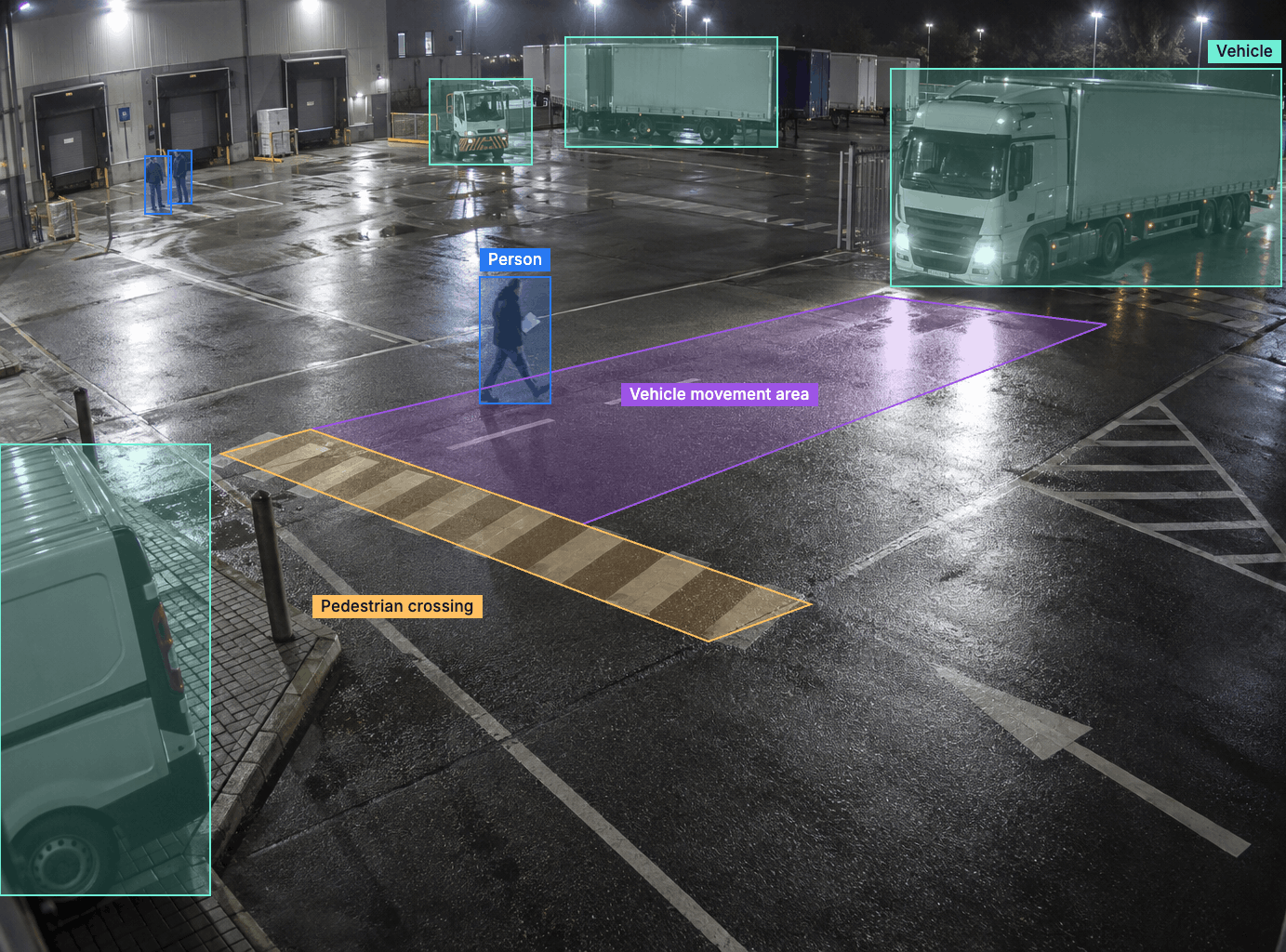
Detection on its own produces alerts nobody trusts. Security work needs position, movement, zone and timing before an alert is worth sending to a person.
ALERT
- CLASSIFICATIONperson on foot
- WHEREon the marked crossing
- INTERACTIONlorry on a converging path
- GAP15 m, closing
Clip attached. Faces blurred on the device.
-
Objects and people
Detected, classified and tracked across frames.
-
Movement and behaviour
Direction, speed, dwell and interaction.
-
Zones and relations
Position against a boundary or an asset.
-
Change over time
What differs between one pass and the next.
-
Anonymisation
Faces and plates blurred before storage.
-
Event records
Structured, time-stamped, searchable.
Evidence
In operation outside the lab
Multiple deployments outside road transport, with the organisations that run them.
AIR
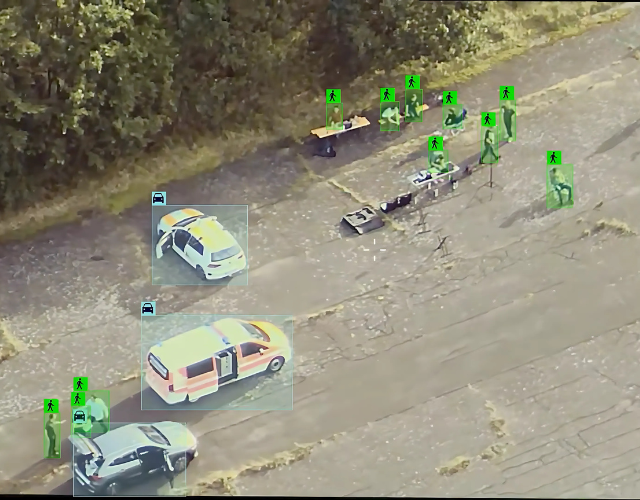
The scene, before the crew arrives
Live drone footage with detection overlays, streamed into fire brigade vehicles on their way to an emergency.
WITHGaia-X 4 AMS consortium, local fire services
Read the case
FIXED INSTALLATIONS
A public space that warns only when the risk is real
Sensors and adaptive signage watch a school zone, and warn when the situation calls for it. Drivers stop tuning the signs out.
WITHT-Systems, Landshut University of Applied Sciences, City of Landshut, backed by the BMDV
Read the case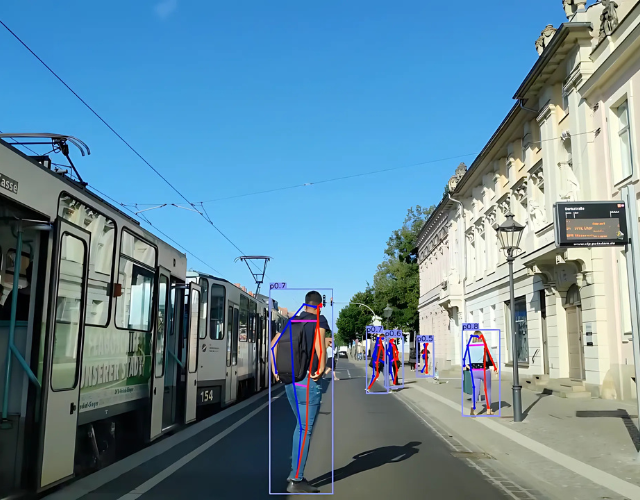
GROUND · DEMONSTRATION
Perception on a body-worn camera
Anonymisation, detection and pose tracking running on the camera itself, inside the power a worn device carries.
WITHBuilt by Peregrine Labs as a working demonstration
Discuss a body-worn buildIntegration
Plugs into your control room
We add perception to your cameras and send the result to your operators.
INPUT
Continuous video
ON THE DEVICE
Peregrine Vision
WHAT LEAVES
Structured events
- Person in a restricted zone
- Vehicle entering the lane
- Gate state changed
OUTPUT
Your system
- VMS
- Mission control
- Dispatch
- GIS
- SCADA
- Your dashboard
Two frames in forty were worth sending. The rest never left the camera.
Hardware-agnostic
Embedded GPU, CPU, NPU or ASIC.
Updates over the air
Reach devices in the field.
Modular event logic
Change classes, zones and triggers.
APIs and SDK
Firmware, REST or webhooks.
Silicon we deploy on today. If your chipset is not here, ask us.



Privacy and sovereignty
Anonymised before it is stored
Faces and licence plates are blurred. All footage is encrypted.
- No facial recognition
Nobody is identified. Faces are removed.
- Deployable under GDPR and the EU AI Act
Written into the design rather than added at the end.
- Your infrastructure, your country
Processing can run on hardware you own, on sites with no connection.

Who we build with
Partners who operate outside the lab
Operators, integrators and research institutes we have delivered with.
DELIVERY AND RESEARCH










PROGRAMMES AND FUNDING




Research
The people we work through the hard problems with
Joint research with three German universities, on perception, data and learning from real scenes.



In early 2023, we hired the first Ph.D. student conducting cutting-edge research at the intersection of AI and sustainability as part of a joint program between HPI and Peregrine.
 Professor Ralf HerbrichHasso Plattner Institute
We have successfully conducted joint research on Self-Supervised Contrastive Learning in Traffic Scenes, experimenting with new approaches for Instance Segmentation using unique data provided by Peregrine.
 Professor Cyrill StachnissUniversity of Bonn
We worked with Peregrine and Seagate to experiment with real-time data logging and Peregrine's smart data campaigning system for real-time data annotation using our self-driving vehicle “MadeInGermany”.
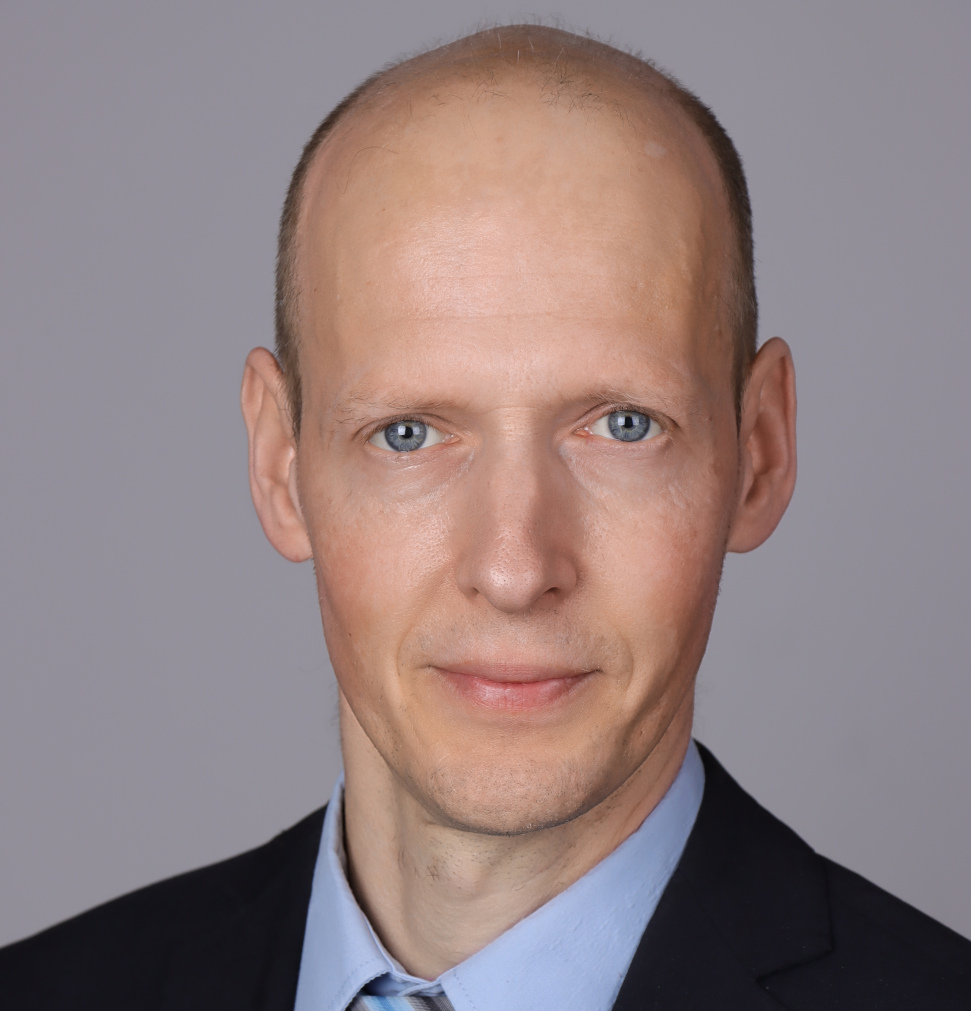 Professor Daniel GöhringFreie Universität Berlin